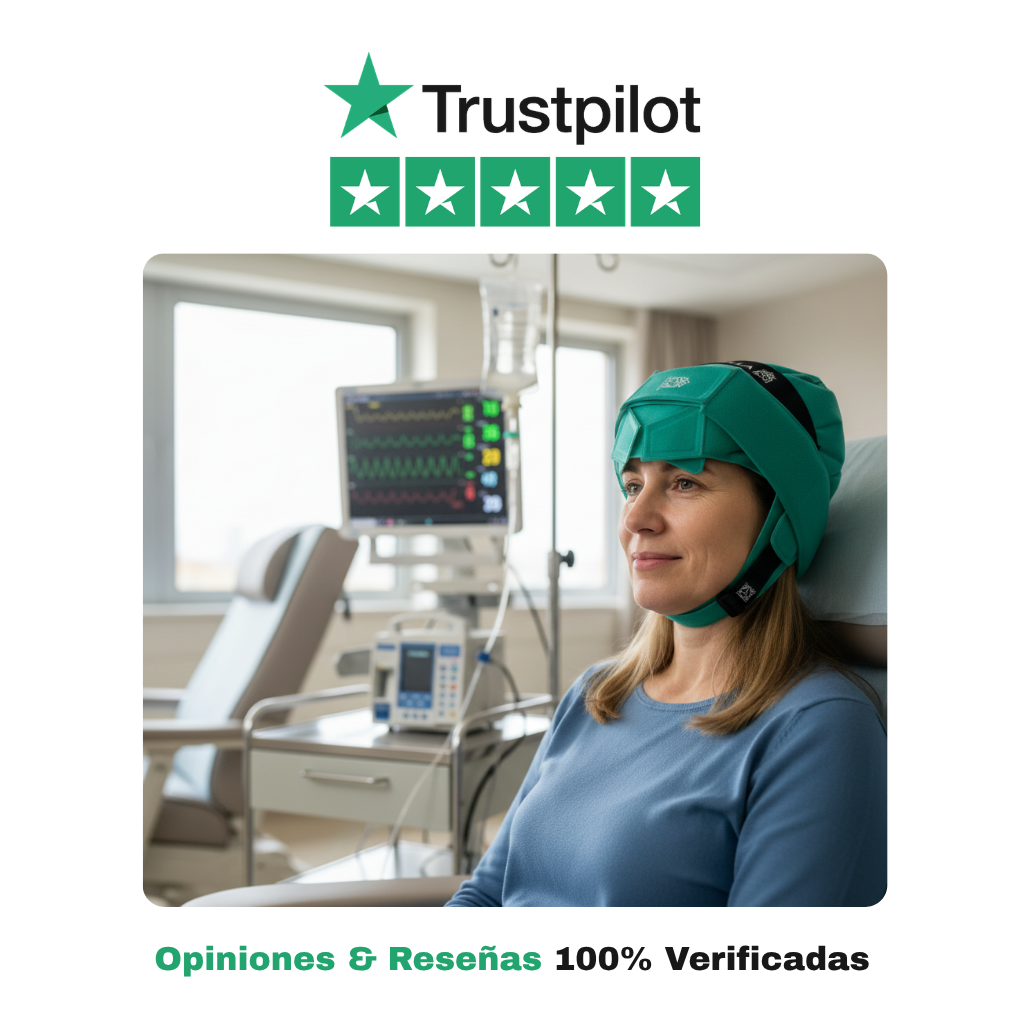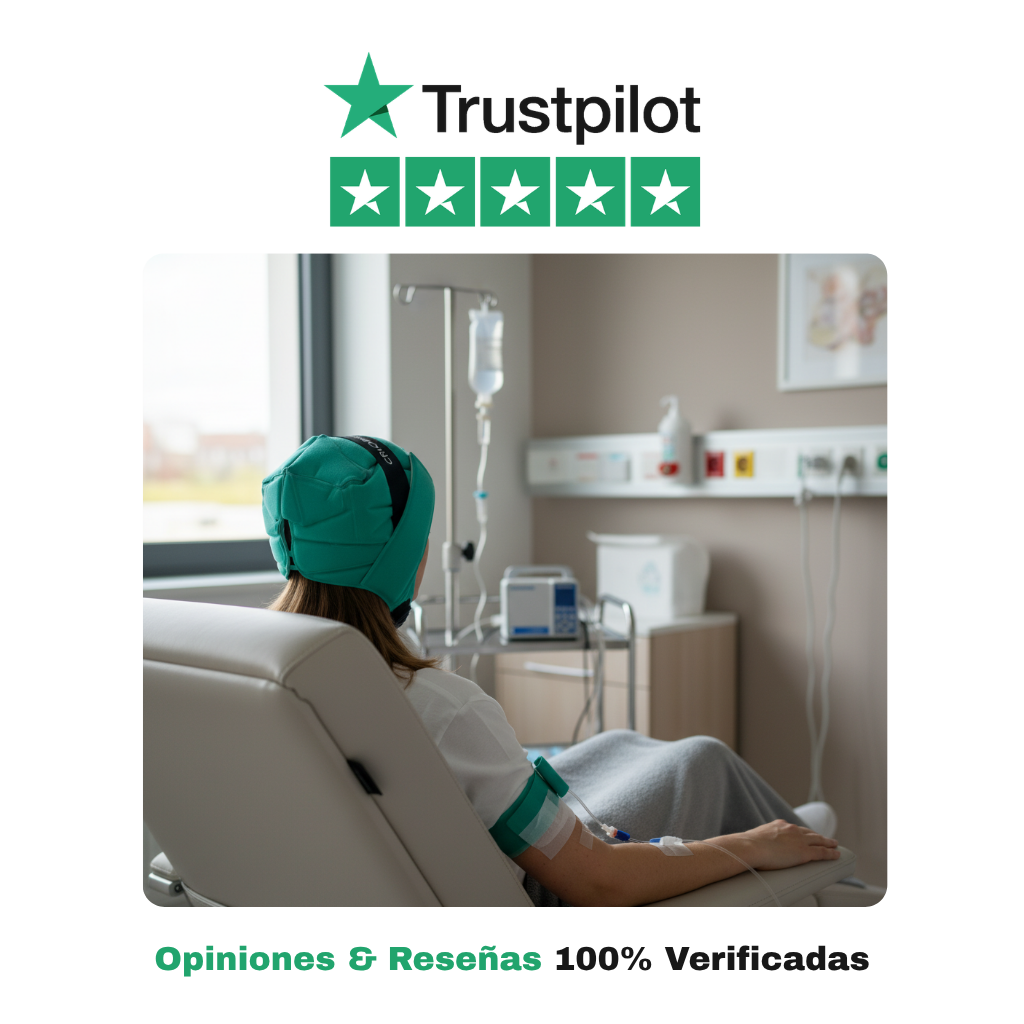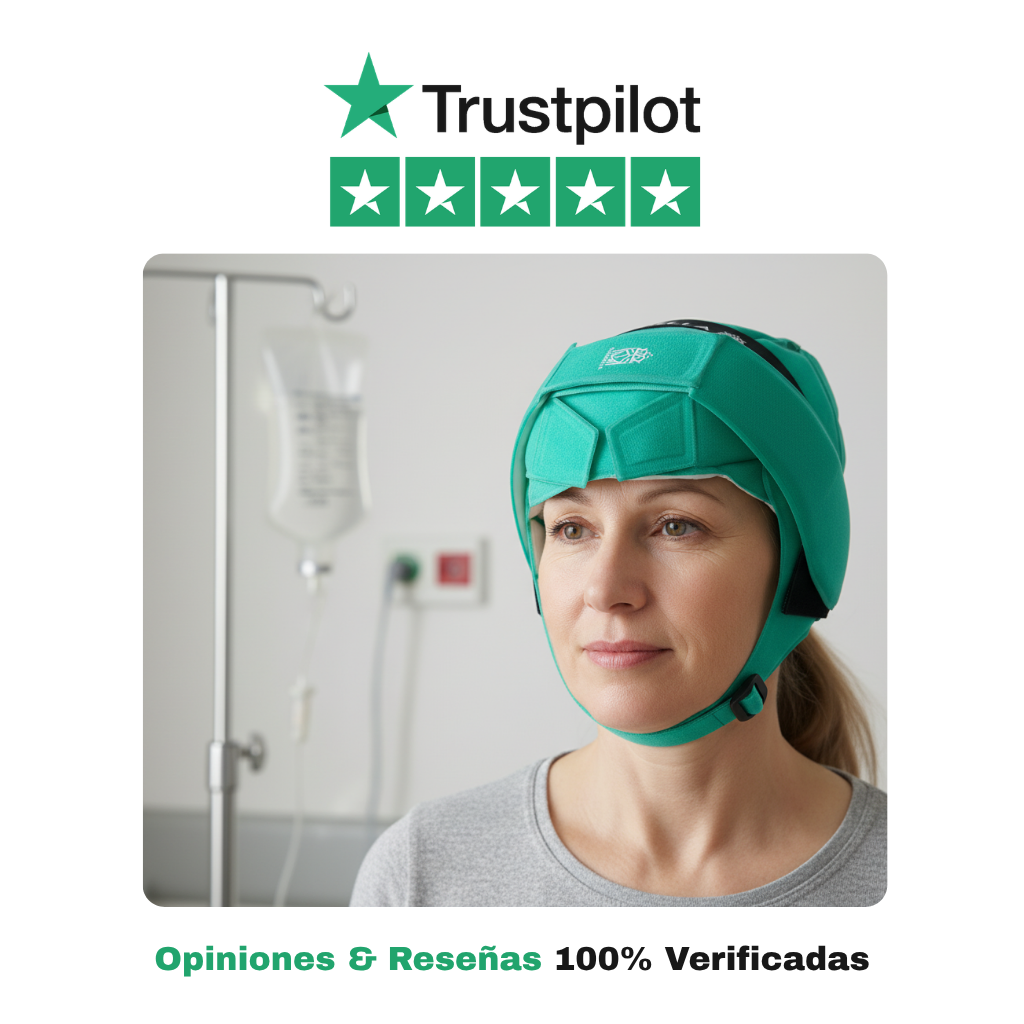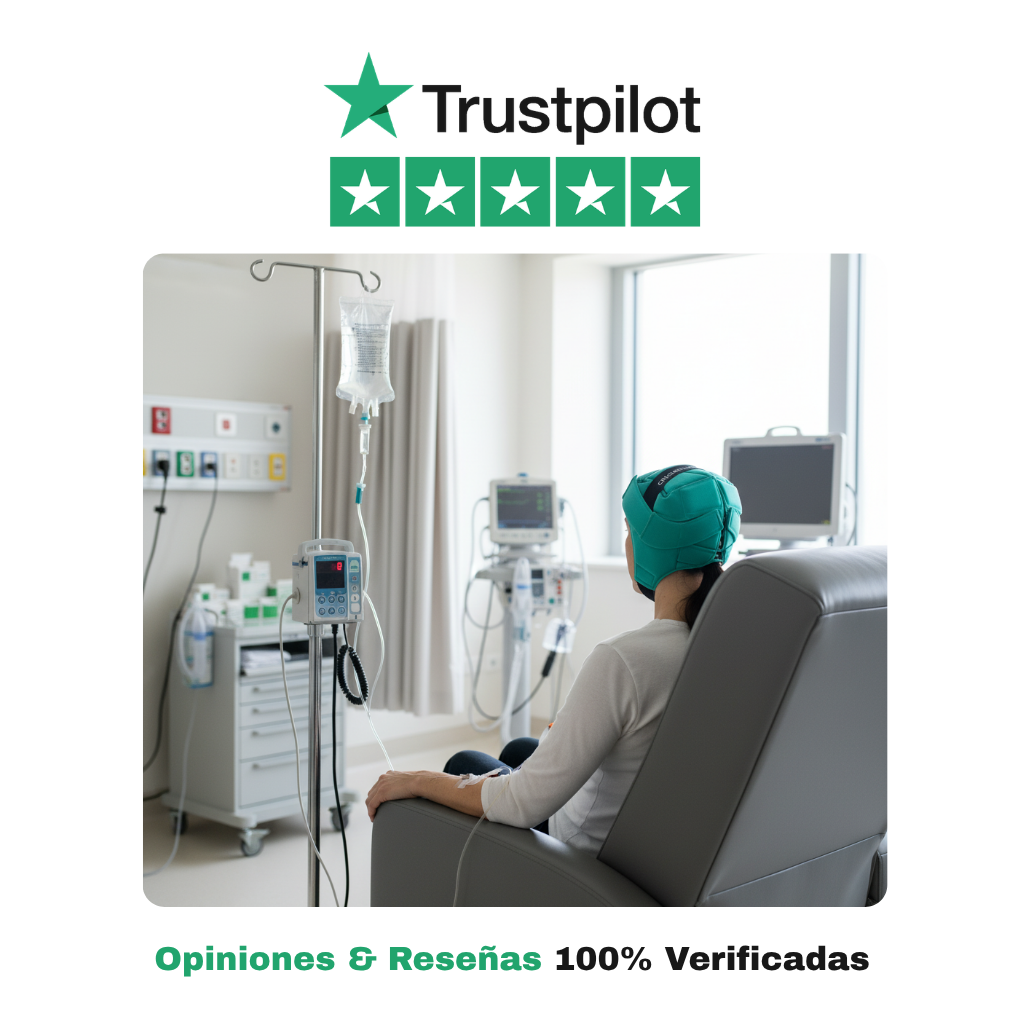


Now, keeping your hair during chemo is up to you.

Real opinion on the use of the hypothermic cap in chemotherapy: “I have kept my hair during the whole treatment”.”

Does the hypothermic cap work during chemotherapy? A breast cancer patient shares her real life experience

Hypothermic chemotherapy capthree words that can change the emotional approach to cancer treatment. Hair loss is one of the most visible side effects of chemotherapy and for many people it is a psychological blow. That is why solutions such as capillary cooling caps are becoming important allies in maintaining self-image and self-esteem.

In this review published on Trustpilot, a patient with HER2-positive breast cancer tells us how she was able to keep your mane intact during the entire treatment with paclitaxel and trastuzumab thanks to the use of these caps. A true story, detailed and honest, reflecting the importance of having control over one's image even in the most difficult times.

Key points of their experience:

  • Retained hair on all areas of the head.

  • He wore 5 caps, alternating them every 30-40 minutes.
  • Direct medical recommendation from your oncologist.

  • Storage of the caps in a freezer and thermal bag.

  • Family and emotional support during the process.

Full testimonial: their experience with the Criobella hypothermic beanie

Here is an original and unmodified testimonial from a real patient who has used Criobella caps during her cancer treatment:

My experience has been really good, I have kept my hair throughout the whole chemotherapy process, it has fallen out as if it were autumn, which falls out more, but at no point have I had any clumps. I have had my hair intact in all areas of my mane.

It's cold, but it's mainly at the beginning with the first hat and in the first few minutes after changing the hat, then the body is intelligent and forgets about it so as not to suffer. I used to fall asleep. For the cold I wore thermal socks, a fat jumper and as a blanket I used a jacket with battery-operated heating elements that gave me a lot of warmth and helped me with the cold on my head.

I have HER2-positive breast cancer, I had a complete mastectomy and then treatment. My treatment consisted of 12 weekly chemotherapy sessions with the drug paclitaxel combined with Trastuzumab, which are antibodies. My oncologist recommended the caps for this type of medication, she told me that the efficacy is different depending on the type of medication, that is why I have given you my treatment.

I bought 5 caps, I started wearing them half an hour before chemotherapy, during chemotherapy and one hour after. My sessions were 4 hours but the chemotherapy bag was only one hour. The rest are other drugs, you have to know the order of the drugs to schedule when to put the caps on. I changed my caps every half hour as quickly as possible so as not to interrupt the cold, sometimes I had them on for 35 or 40 min. During that time, the caps that you are not wearing were always kept in a thermal bag that came with the caps and so they don't lose the cold. I kept the caps in the freezer all week so that they would be well frozen for the day of the chemotherapy, always in their individual plastic bags to protect them from odours.

If I have to put a downside to the hats it is the difficulty of putting them on alone, there are many velcro fasteners and you have to put them on tight so that all the cold goes to the whole head. They helped me, I put them on by myself several times but it is more difficult to adjust them well. I also understand that thanks to those velcro straps it is easier to adapt to all kinds of heads, which improves the efficiency. Also, I used to wear the black appointments that go with the caps, which make the cap fit even tighter to the head.

To finish, I would like to comment that hair may seem unimportant in the process, but my experience is that having hair has helped me not to feel ill, to tell who I want and how I want that I am ill, not that everyone knows what I am going through and above all, that my children see me well at home. They know in detail what I am going through, I don't hide anything, but it is not the same for them to see me well, as usual or without hair. For me it has been worth the financial expense and the effort of being cold. I have been very encouraged and that is important in these processes.

I hope that my experience will help others. Strength to all of us who are going through this. Courage.

👉 See original review on Trustpilot

Testimonial Trustpilot Ana Hernandez on the use of the Criobella hypothermic cap
Ana H. rated with 5 stars her experience with Criobella caps to preserve hair during chemotherapy.

What are the benefits of wearing a hypothermic cap for breast cancer patients?

The use of the hypothermic cap is not simply an aesthetic issue. According to numerous clinical studies, its application is clearly associated with a significant reduction in chemotherapy-induced alopecia, especially in patients receiving drugs such as paclitaxel, docetaxel and, in certain cases, trastuzumab when administered together with cytotoxic agents.

A meta-analysis of 13 studies with 832 patients (mainly women with breast cancer) showed that scalp cooling reduced the incidence of breast cancer in the first three years of treatment by 43% the incidence of hair loss higher than 50% compared to patients without cooling. Another independent meta-analysis, published in Clinical Breast Cancer, confirmed this benefit (RR = 0.57) with moderate quality evidence.

Patient experience also confirms this: in studies with modern regimens such as taxanes alone (paclitaxel or docetaxel), capillary preservation rates up to 68%, and in some cases higher than the 80%, depending on the chemotherapy protocol.

For example:

  • In breast cancer patients treated with paclitaxel weekly, In 87.5%, 87.5% kept more than half of their hair, while with the conventional scheme (every 3 weeks), severe alopecia was observed in almost all patients.
  • In another clinical study with paclitaxel in early breast cancer, the 66% of patients who used cool caps preserved hair below the 50% threshold for hair loss, compared to a 0% in the non-cooled group.

These results show that scalp cooling not only helps to preserve the hair, but also has a positive impact on hair growth. self-image and emotional well-being. Patient studies show how hair loss affects self-esteem, social relationships and adherence to treatment.

Youtube #!trpst#trp-gettext data-trpgettextoriginal=1633#!trpen#video#!trpst#/trp-gettext#!trpen#

Source: https://www.trustpilot.com/users/683f2937f0e9f3244b61aef0; 1) Auvinen P. et al. (2010). The effectiveness of a scalp cooling cap in preventing chemotherapy-induced alopecia. Tumori Journal. 2) Gianotti E. et al. (2019). Scalp Cooling in Daily Clinical Practice for Breast Cancer Patients Undergoing Curative Chemotherapy. Asia Pacific Journal of Oncology Nursing. 3) Cryobella. Effectiveness of hypothermic caps in carboplatin/paclitaxel chemotherapy. 4) Cryobella. Effectiveness of hypothermic caps in the prevention of alopecia due to chemotherapy with Taxol in breast cancer. 5) Young A., Arif A. (2016). The use of scalp cooling for chemotherapy-induced hair loss. British Journal of Nursing.

Date of publication: 09/07/2025

Refrigeration Cap Calculator

How many caps you need for your treatment

Select the length of your chemotherapy sessions to get your personalised cold cap recommendation, along with the price and details of the ideal plan for you.

AEMPS Certificate