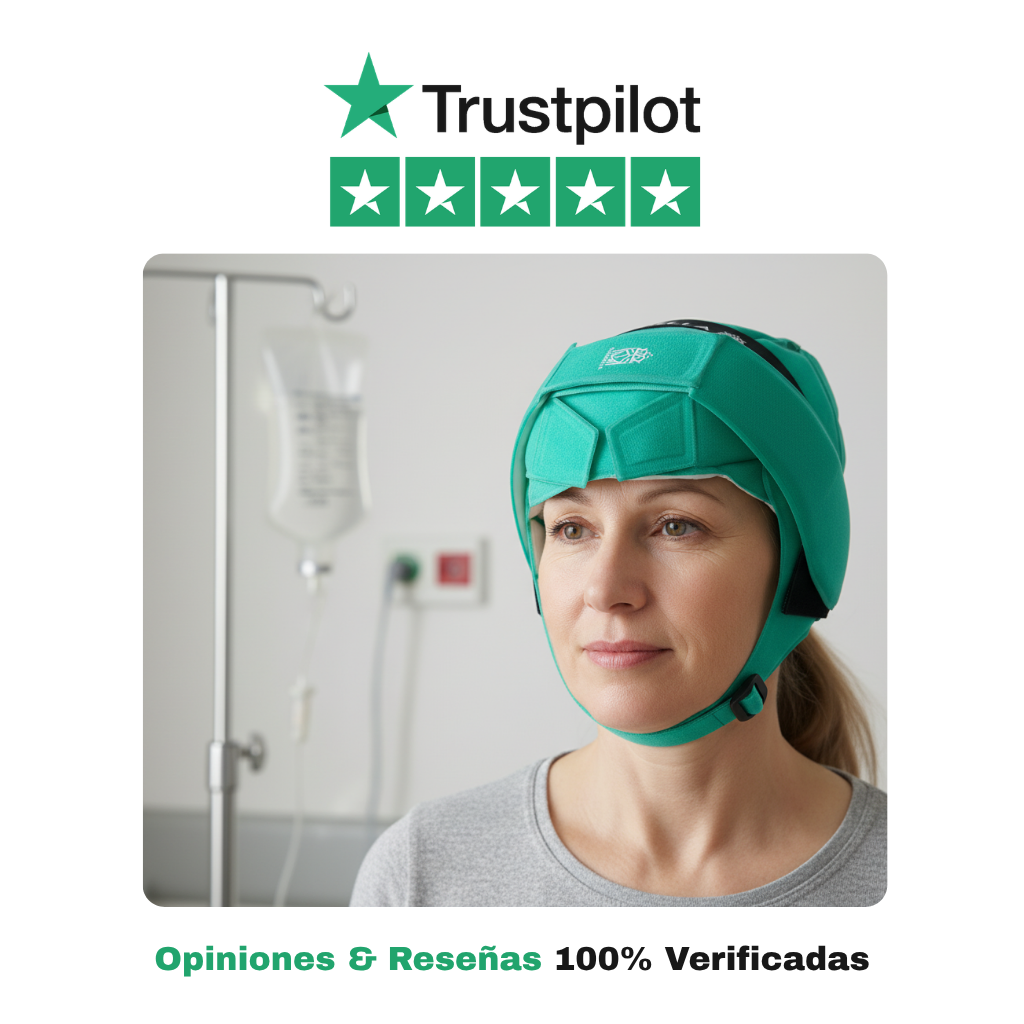
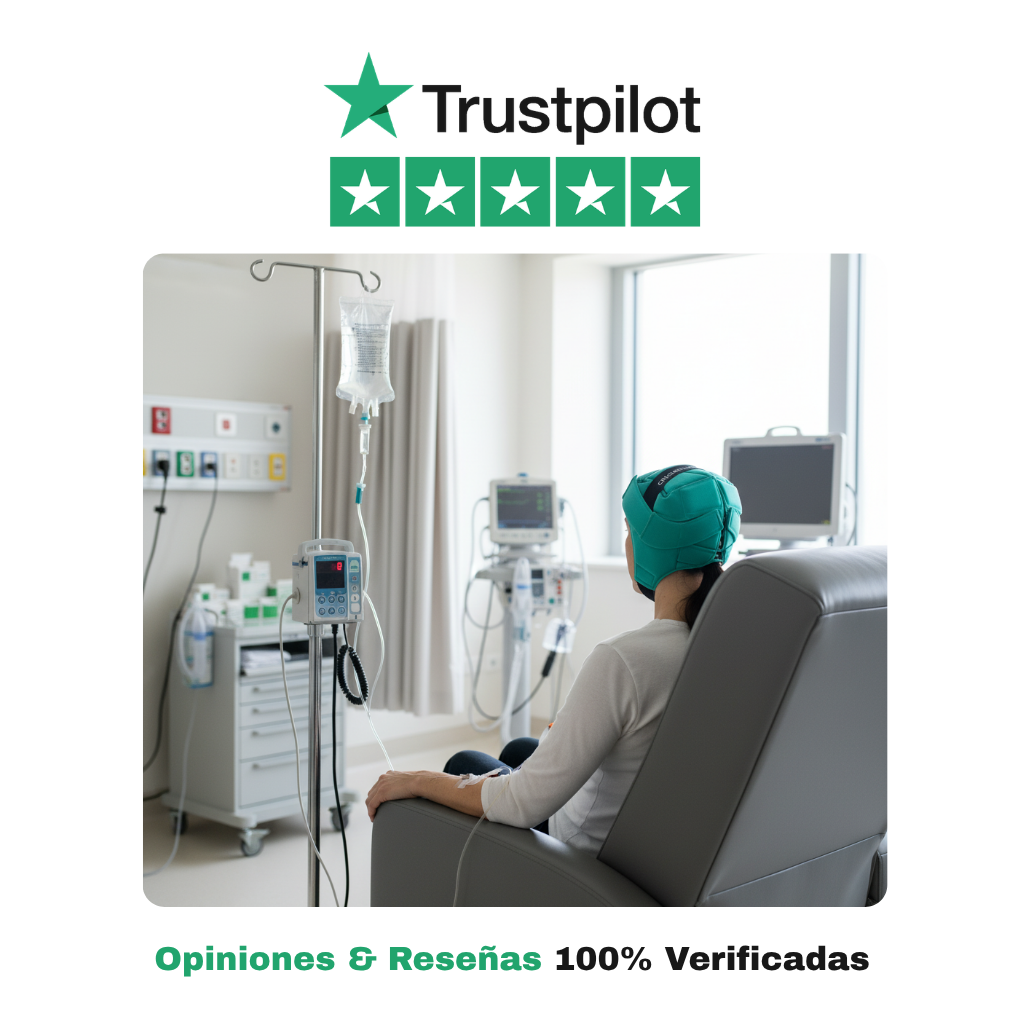


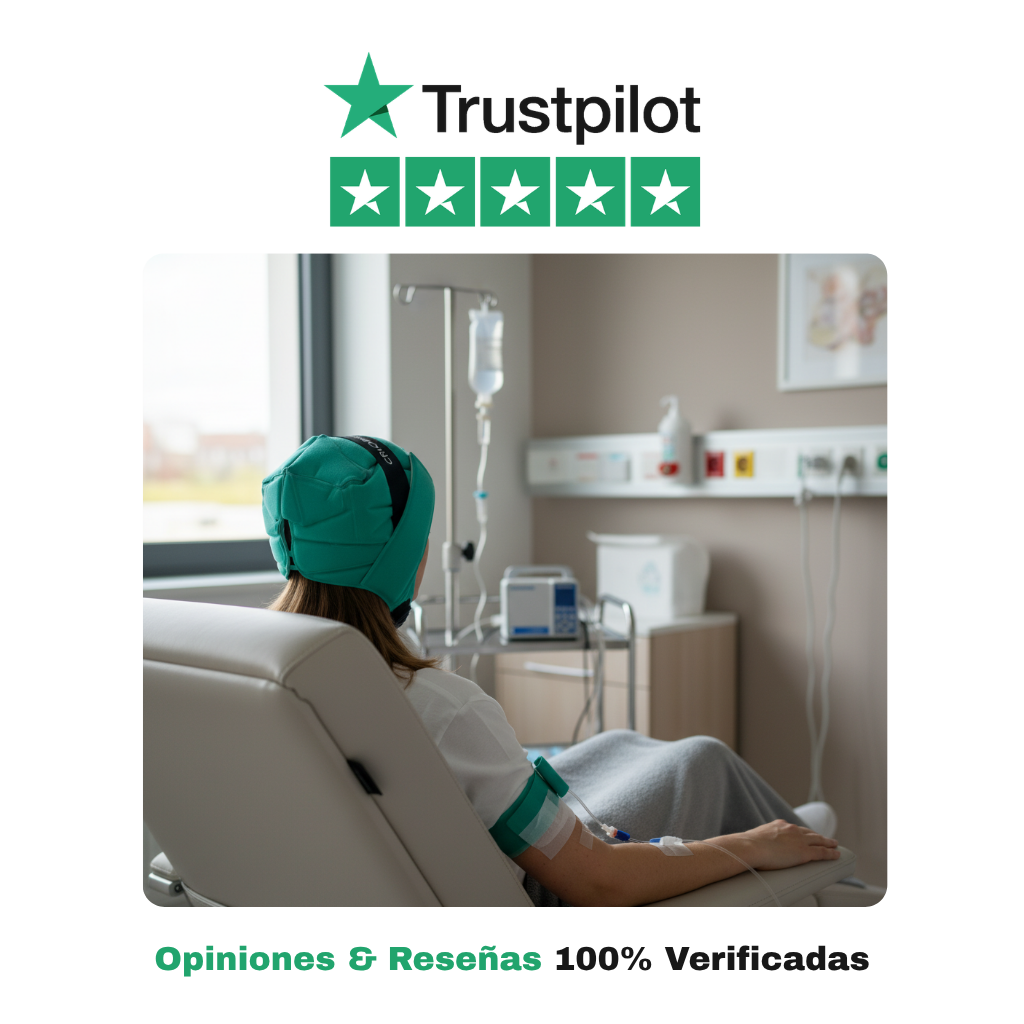
Hypothermic chemotherapy cap opinions are one of the things patients look for most when they are about to start their treatment. Hair loss is often one of the most visible and emotionally difficult side effects to deal with during chemotherapy.
The system of capillary cooling, also known as scalp cooling, is used to try to reduce alopecia caused by certain cancer drugs. It aims to decrease blood flow to the scalp during treatment, which can help protect the hair follicles.
Many patients do not expect to keep all their hair, but they are looking for something very important: maintain an image natural enough to carry on with daily life.
Real testimonials help to understand how this experience is lived in practice. Some patients keep most of their hair, others keep only part of it, but even so, they highlight a very important benefit: being able to continue working, socialising or carrying out their usual activities without hair loss completely marking the process.
This is precisely the case for Esther, whose experience shows how keeping some of her hair can have a very positive impact during treatment.
The experiences with hypothermic caps in chemotherapy show that the aim is not always to keep the hair at 100%, but to avoid a complete hair loss that requires shaving or a wig.
In this review published on Trustpilot, a patient explains how the use of capillary cooling caps allowed her to continue her life normally during treatment.
“The use of these caps has helped me a lot to continue my life normally during chemotherapy treatment.
This is the second time I have faced a breast cancer diagnosis. The first time, fifteen years ago, I lost my hair and wore a wig. I stopped doing things because of the feeling of being continually watched.
On this occasion, thanks to the caps and despite having lost about 50% of my hair, the appearance of my hair has not conditioned me at any time”.”

Her testimony reflects something that many patients mention: keeping part of the hair can make a big emotional difference.
Although in this case the patient lost approximately 50% of hair, the final result was sufficient to maintain a natural appearance. This allowed her to go about her daily routine without feeling that the disease was constantly visible.
The psychological impact of alopecia is often not just about the amount of hair lost, but how it changes the way a person perceives themselves and how they think others perceive them.
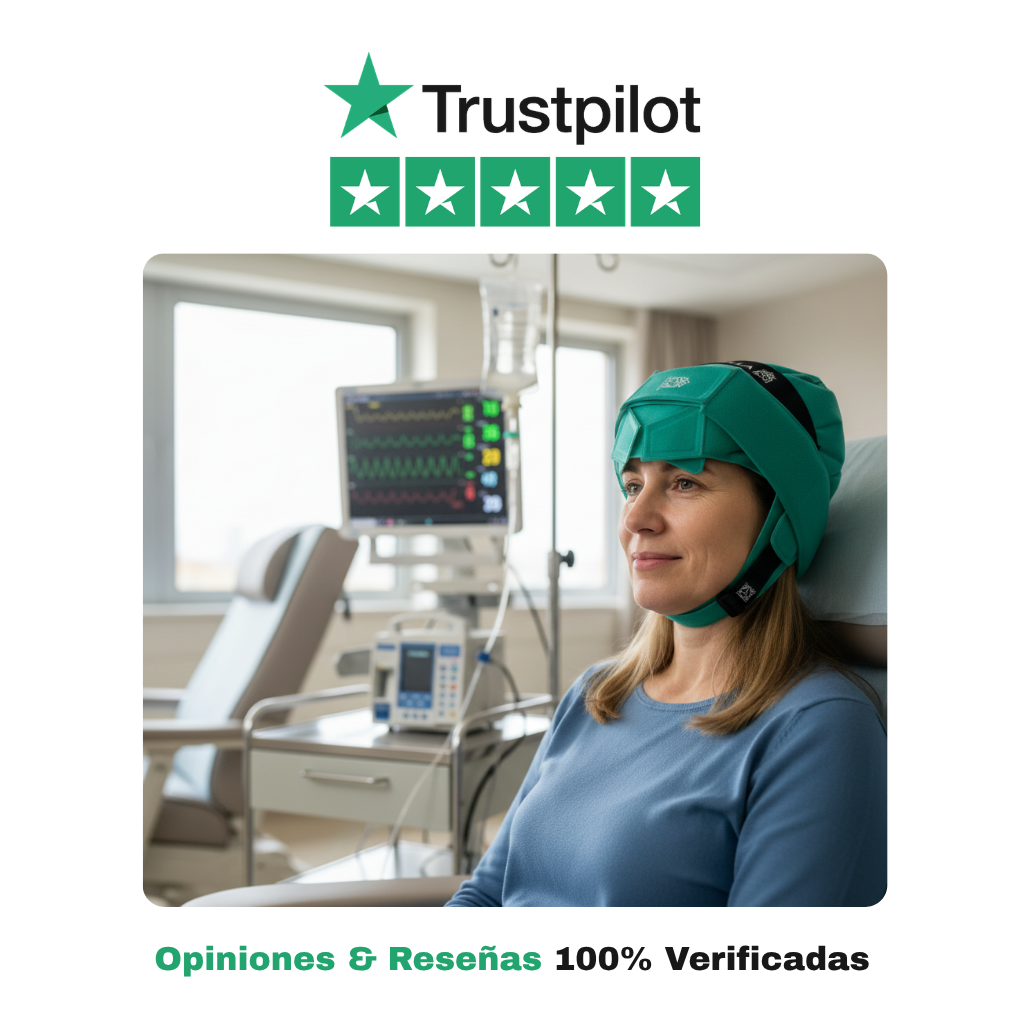
The opinions hypothermic chemotherapy cap show that results may vary depending on the treatment received, the type of drug used and the individual patient's response.
In many cases, the aim is not to keep all of the hair, but rather to reducing alopecia sufficiently to maintain a natural look. For many patients, this may mean continuing to work, socialise or feel more comfortable throughout the process.
Testimonials from patients like Esther reflect something very important: even partial hair preservation can have a huge impact on emotional well-being during treatment.
Hair cooling is not a miracle solution and does not work the same in all cases, but it is currently one of the most widely used tools to try to reduce hair loss during chemotherapy.
Reading about real-life experiences can help other patients understand what to expect and make an informed decision before starting treatment.
If you want to know more testimonials and learn how capillary cooling works step by step, you can continue to explore the articles and patient experiences on Cryobella.