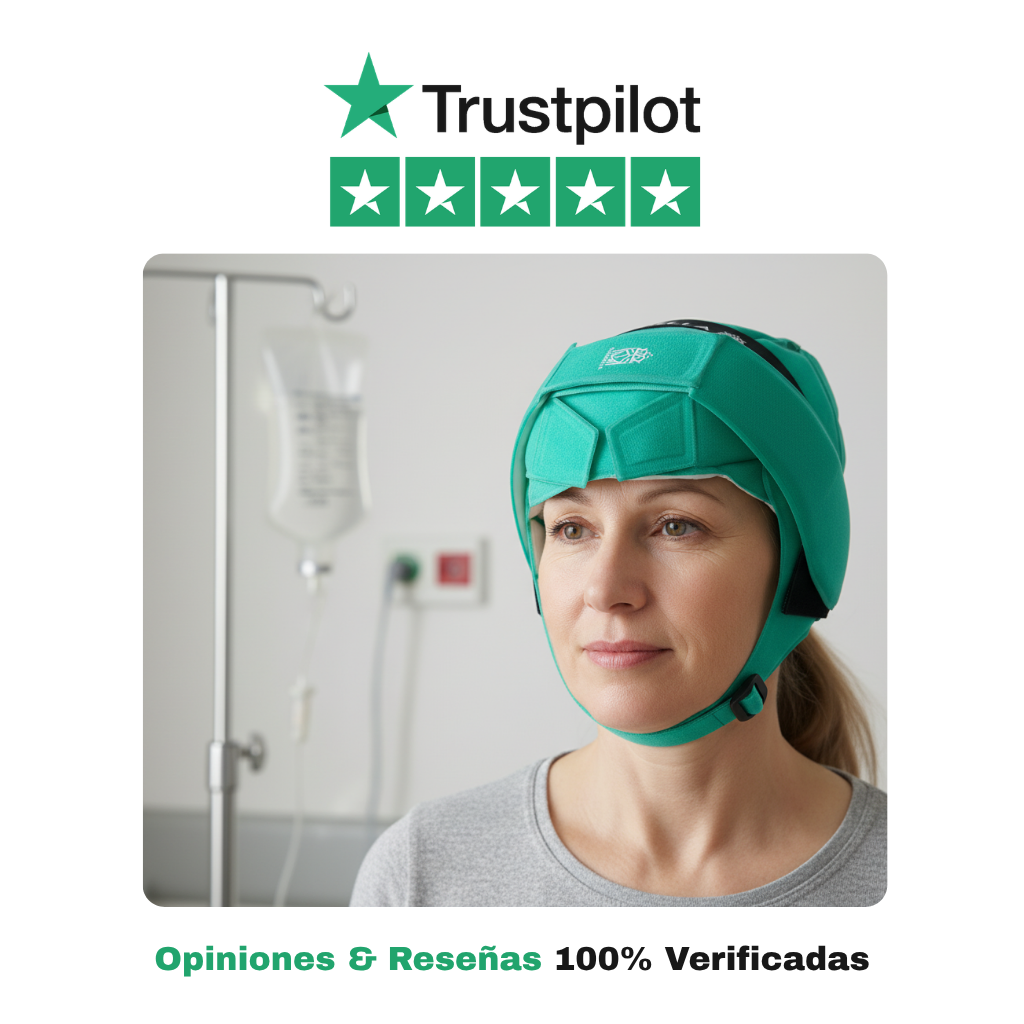
Side effects and tolerance to hypothermic cap treatment
Main side effects of the hypothermic cap during chemotherapy
Side effects and tolerance to treatment are two of the main concerns among patients considering using the hypothermic cap during chemotherapy. This technique, known as scalp cooling, aims to reduce hair loss by cooling the scalp, which decreases local blood flow and the absorption of cytotoxic drugs [1].
The most common side effects include:
Intense feeling of cold
Headache during or after use
Dizziness or disorientation
Localised pain on the forehead, neck or scalp
These symptoms, although bothersome, are generally mild, transitory and not compromising continuity of treatment [2][3]. Thanks to technological advances, modern devices allow temperature to be adjusted dynamically, reducing the intensity of adverse effects [4].
Is the hypothermic cap safe to use? Effects, tolerance and real risks
The tolerance to the hypothermic cap is high in most patients. Studies such as the DigniCap study report that more than 80 %s complete their cycles without significant interruptions due to adverse effects [5]. According to satisfaction surveys, discomfort during the procedure is transient and acceptable [6].
One of the frequent questions is whether cooling the scalp might facilitate the local metastasis. This is a theoretical hypothesis based on the possible protection of tumour cells by vasoconstriction, but the available clinical evidence does not support this concern. A meta-analysis of more than 3,000 patients shows scalp metastasis rates of less than 1 % and no significant difference between those who did and did not use cooling [7][8].
Furthermore, local cooling does not interfere with the systemic efficacy of chemotherapy, as it does not reduce blood drug levels to clinically relevant levels [9]. Current systems use sensors that automatically regulate the temperature, which reduces the risk of thermal injury and improves patient experience [10].
Ultimately, the use of hypothermic caps has established itself as an effective and safe intervention in the prevention of chemotherapy-induced alopecia. Most of the side effects are mild and temporary, and the long-term risks, such as the possibility of scalp metastases, are clinically insignificant according to available data [7][8][11].
In addition to protecting the hair, this technique has a positive impact on the patient's self-esteem and quality of life, which is essential during such a demanding process as chemotherapy [12].
We invite you to watch the following video where we show step by step how to use the cooling cap and clarify the most frequent doubts.
FAQs: Frequently asked questions on side effects and tolerance of hypothermic cap treatment
1. Does it hurt to put on the hypothermic cap? Most patients describe the sensation as annoying, but tolerable. During the first few minutes, the cooling may cause pain in the forehead or scalp, but this usually decreases as the session progresses. Some centres apply strategies such as the use of mild painkillers or gradual pre-cooling phases.
2. What are the most common side effects? The most common include:
Intense feeling of cold
Headache
Pressure on the forehead or neck
Mild dizziness These effects usually disappear soon after the end of the session and are not considered serious【1】.
3. Can the cooling cap cause scalp metastases? This is a theoretical risk which generated controversy in the past, but current clinical studies have not found an increased incidence of local metastasis. in patients wearing hypothermic caps【2】. The available scientific evidence considers it safe.
4. What if I can't stand the cold of the treatment? In this case, it is important to communicate it to the medical team. It is possible to adjust usage times, introduce breaks or even consider other methods. However, the majority of patients adapt after the first few sessions【3】.
Source: 🟨 sources (APA, with tags type [1], [2], etc.) [1] Jackson, A. A. A., & Nangia, J. (2017). Scalp cooling to prevent or reduce chemotherapy-induced alopecia. Expert Review of Quality of Life in Cancer Care. https://www.tandfonline.com/doi/full/10.1080/23809000.2017.1373813 [2] Belum, V. R., et al. (2016). Cold thermal injury from cold caps used for the prevention of chemotherapy-induced alopecia. Breast Cancer Research and Treatment. https://link.springer.com/article/10.1007/s10549-016-3726-1 [3] Zhang, X., et al. (2022). Effectiveness, Safety, and Tolerance of Scalp Cooling. Oncology Nursing Forum. https://pubmed.ncbi.nlm.nih.gov/35666194/ [4] Fehr, M. K., et al. (2016). Sensor-Controlled Scalp Cooling to Prevent Chemotherapy-Induced Alopecia. Current Oncology. https://www.mdpi.com/1718-7729/23/6/63 [5] Mustoe, M. M., et al. (2018). The Dignicap Scalp Cooling System and its Use in the Treatment of Chemotherapy-Induced Alopecia. Future Oncology. https://www.futuremedicine.com/doi/full/10.2217/fon-2017-0417 [6] Schwenk, A. (2024). The Use of Scalp Cooling for Chemotherapy-Induced Alopecia. [7] Rugo, H. S., & Voigt, J. (2018). Scalp Hypothermia for Preventing Alopecia During Chemotherapy: A Systematic Review and Meta-Analysis. Clinical Breast Cancer. https://www.sciencedirect.com/science/article/abs/pii/S1526820917302602 [8] Nangia, J., et al. (2017). Effect of a Scalp Cooling Device on Alopecia in Women Undergoing Chemotherapy for Breast Cancer. JAMA. https://jamanetwork.com/journals/jama/fullarticle/2603977 [9] Shah, V. V., et al. (2018). Scalp hypothermia as a preventative measure for chemotherapy-induced alopecia. Journal of the European Academy of Dermatology and Venereology. https://onlinelibrary.wiley.com/doi/full/10.1111/jdv.14745 [10] Gianotti, E., et al. (2019). Scalp Cooling in Daily Clinical Practice for Breast Cancer Patients. Asia-Pacific Journal of Oncology Nursing. https://www.apjon.org/article/S2347-5625(19)30036-1/fulltext [11] Mokbel, K., et al. (2024). Superficial Scalp Hypothermia in Breast Cancer Survivors. Journal of Clinical Medicine. https://www.mdpi.com/journal/jcm [12] Kruse, M., & Abraham, J. (2018). Management of Chemotherapy-Induced Alopecia With Scalp Cooling. Journal of Oncology Practice. https://ascopubs.org/doi/10.1200/JOP.2017.025221
Date of publication: 26/06/2025
Refrigeration Cap Calculator
How many caps you need for your treatment
Select the length of your chemotherapy sessions to get your personalised cold cap recommendation, along with the price and details of the ideal plan for you.