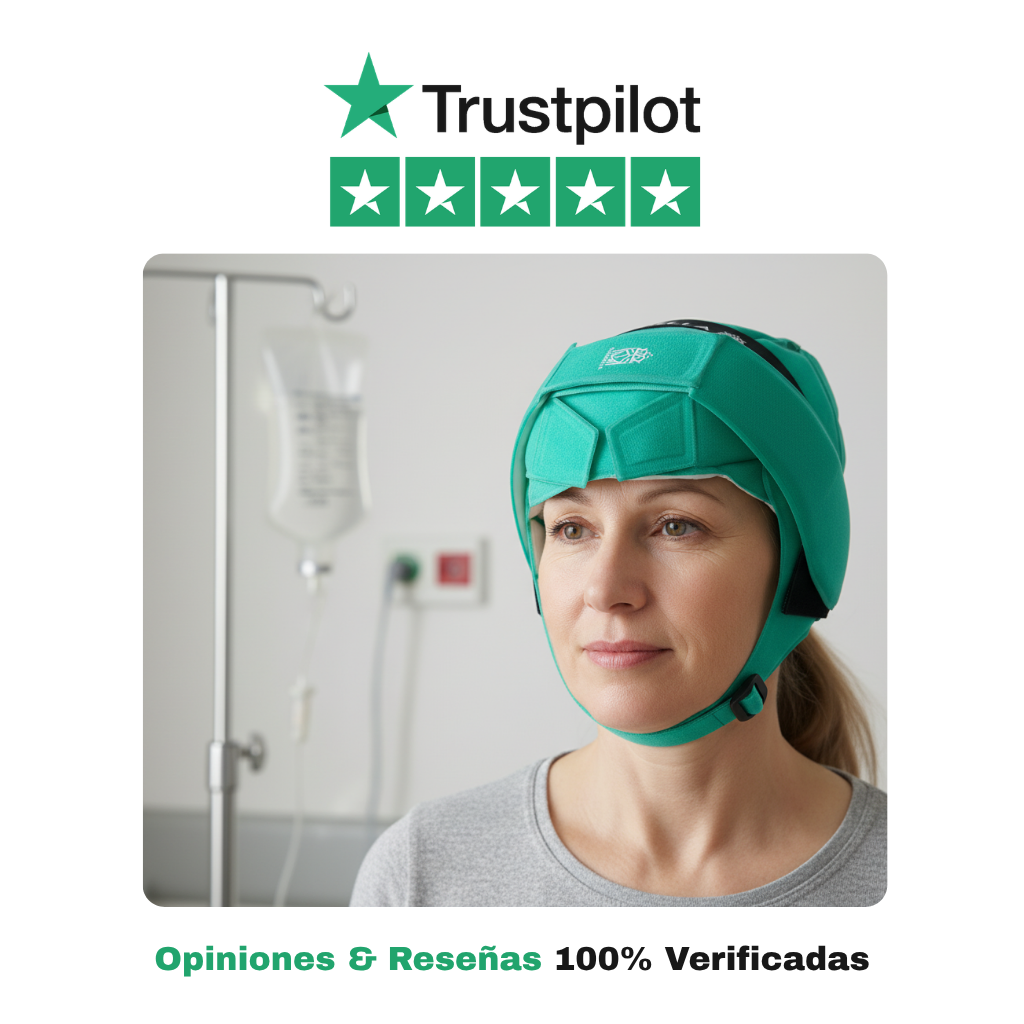
Effectiveness and Success Rate of the Cold Cap: Scientific Evidence and Success Stories
Effectiveness and success rate of the cold cap
The effectiveness and success rate of the cooling cap is a key concern for many patients starting chemotherapy.
The latest studies show that using a cold cap can reduce hair loss, with success rates ranging from 30% and 90%, depending on factors such as:
The type of drug (taxanes vs. anthracyclines)
The cooling protocol (pre-cooling and post-cooling times)
The sequence of treatment administration
The anatomical fit of the cap
And the patient’s individual tolerance to the cold
What do studies actually show regarding the cold cap?
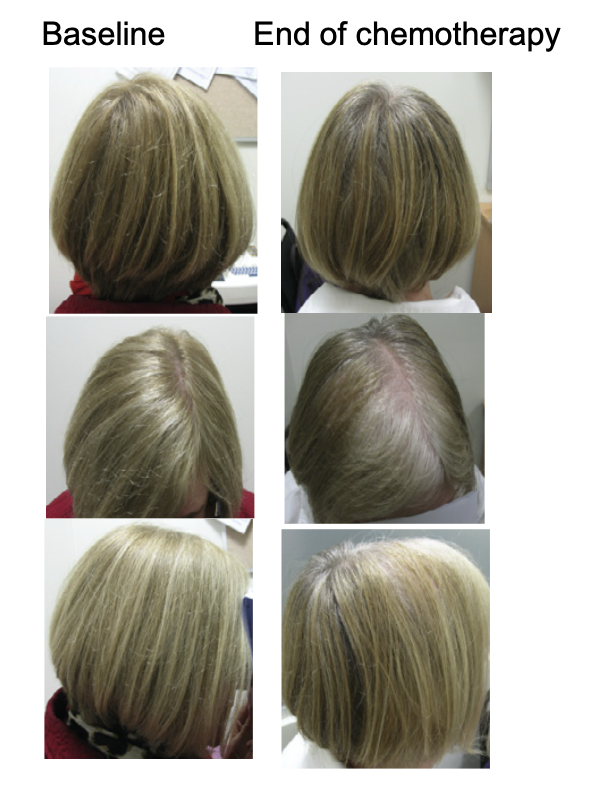
The effectiveness of the cold cap has been documented in dozens of clinical trials and systematic reviews. In breast cancer patients treated with taxanes, hair preservation rates exceed 70% in many cases [5][6]. In monotherapy regimens with taxanes, success rates of 88% have been reported [6], whilst in combinations with anthracyclines, results range from 59% to 76% [16].
One of the most influential studies, the SCALP clinical trial [4], revealed that 50.51% of breast cancer patients who used a cold cap retained at least 50% of their hair, compared to 0% in the control group. Furthermore, studies such as HOPE and PSCS [14][19] indicate that a significant number of patients are able to avoid wearing a wig at the end of treatment. These findings confirm that, when applied correctly, scalp cooling can lead to a tangible improvement in the patient’s quality of life.
Key success factors:
Start cooling 30 minutes before chemotherapy
During the chemotherapy session, change your cap every 30 minutes
Leave on for a further 60 to 120 minutes
Ensure that the cap fits snugly and evenly on the scalp
Maintain a constant temperature between -10 and 0 °C throughout the procedure
Studies have also ruled out serious side effects. Most patients report only mild discomfort such as headache, chills or a feeling of pressure [10,22], with a dropout rate of less than 71% [8]. These figures show that, as well as being effective, the cold cap is safe and well tolerated by most users.
Summary, recommendations and next steps
The data is conclusive: The cold hat works and can make a real difference to the quality of life of cancer patients. It is not just about preventing hair loss, but about safeguarding dignity, self-esteem and personal image during a particularly vulnerable time. Its effectiveness depends on various technical and physiological factors, but studies clearly support its use, particularly in treatments involving taxanes.
At Criobella, we encourage all patients to discuss this option with their oncologist. The combination of an appropriate treatment protocol, well-designed caps and correct application can significantly improve the treatment experience. We also recommend reviewing clinical guidelines and consulting with specialist professionals to find out whether this technique is suitable for your specific case.
FAQs
What is the success rate of the cold cap?
It depends on the treatment. It can range from 30% to 90%, and is more effective with taxanes [6][16].
Is the cold cap safe?
Yes. There is no evidence of metastasis in the scalp or of any serious side effects [22].
Does it hurt? Is it uncomfortable?
Only at the start. Most people tolerate it well. Headache and mild chills are common side effects [10][8].
Would you like to find out more? We’ve put together a video with all the details on how the cooling cap works, its mechanism of action, and what patients who’ve already used it have to say. Press play, find out all you need to know, and if you have any questions, we’re here to help you every step of the way.
Source: [4] Nangia, J. et al. (2017). Effect of a Scalp Cooling Device on Alopecia in Women Undergoing Chemotherapy for Breast Cancer: The SCALP Randomised Clinical Trial. JAMA.[5] Orlando, L. et al. (2019). Final Results of a Prospective Study of Scalp Cooling in Preventing Chemotherapy-Induced Alopecia. Future Oncology.[6] Vasconcelos, I. et al. (2018). Scalp cooling successfully prevents alopecia in breast cancer patients undergoing anthracycline/taxane-based chemotherapy. The Breast.[8] Fehr, M.K. et al. (2016). Sensor-Controlled Scalp Cooling to Prevent Chemotherapy-Induced Alopecia in Female Cancer Patients. Current Oncology.[10] Kate, S. et al. (2021). Safety and efficacy of scalp cooling system in preventing chemotherapy-induced alopecia. Cancer Treatment and Research Communications.[14] Kinoshita, T. et al. (2019). The HOPE Study. Frontiers in Oncology.[16] Villarreal-Garza, C. et al. (2020). Impact of chemotherapy regimen and sequence on the effectiveness of scalp cooling. Breast Cancer Research and Treatment.[19] Portable Scalp Cooling System (2024). Cooler Heads Clinical Trial. Clinical Trial.[22] Rugo, H.S. et al. (2017). Association Between Use of a Scalp Cooling Device and Alopecia After Chemotherapy for Breast Cancer. JAMA.
Publication date: 19 June 2025
Refrigeration Cap Calculator
How many caps you need for your treatment
Select the length of your chemotherapy sessions to get your personalised cold cap recommendation, along with the price and details of the ideal plan for you.