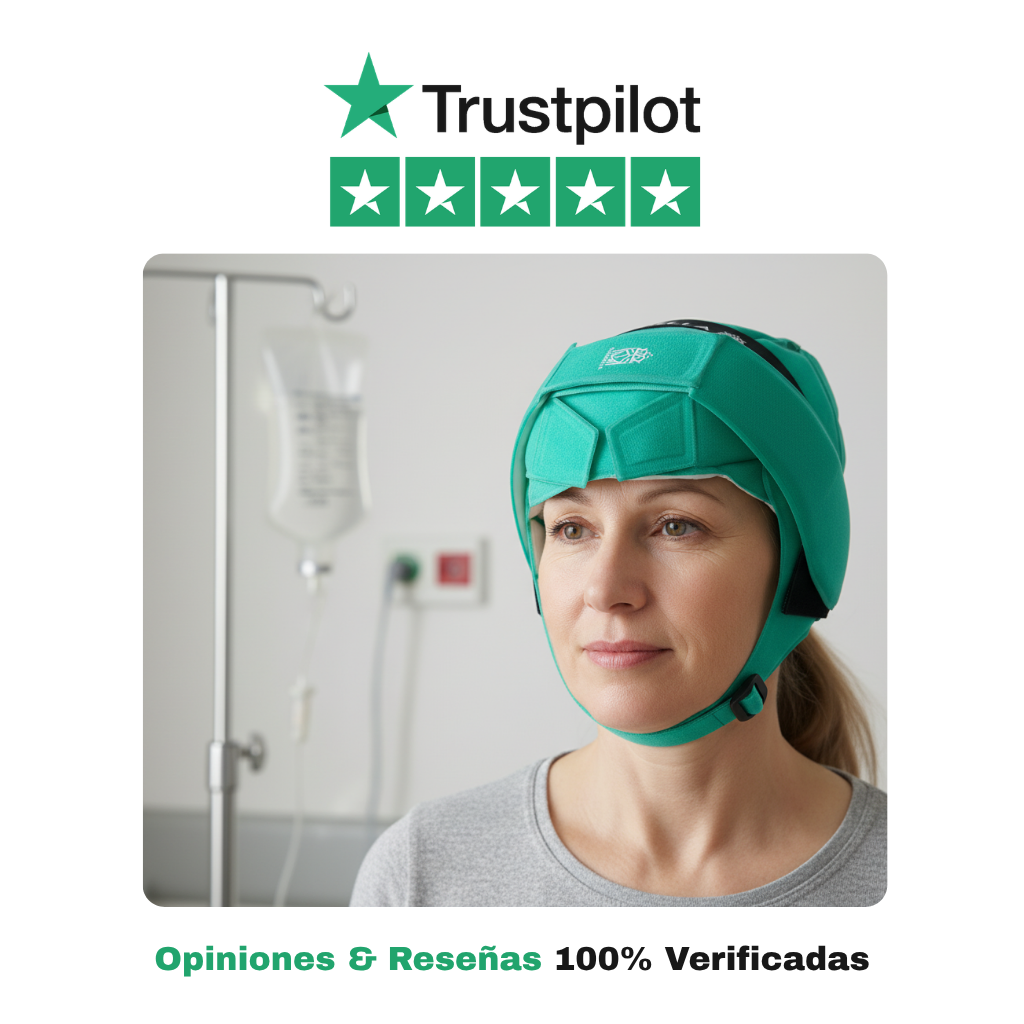
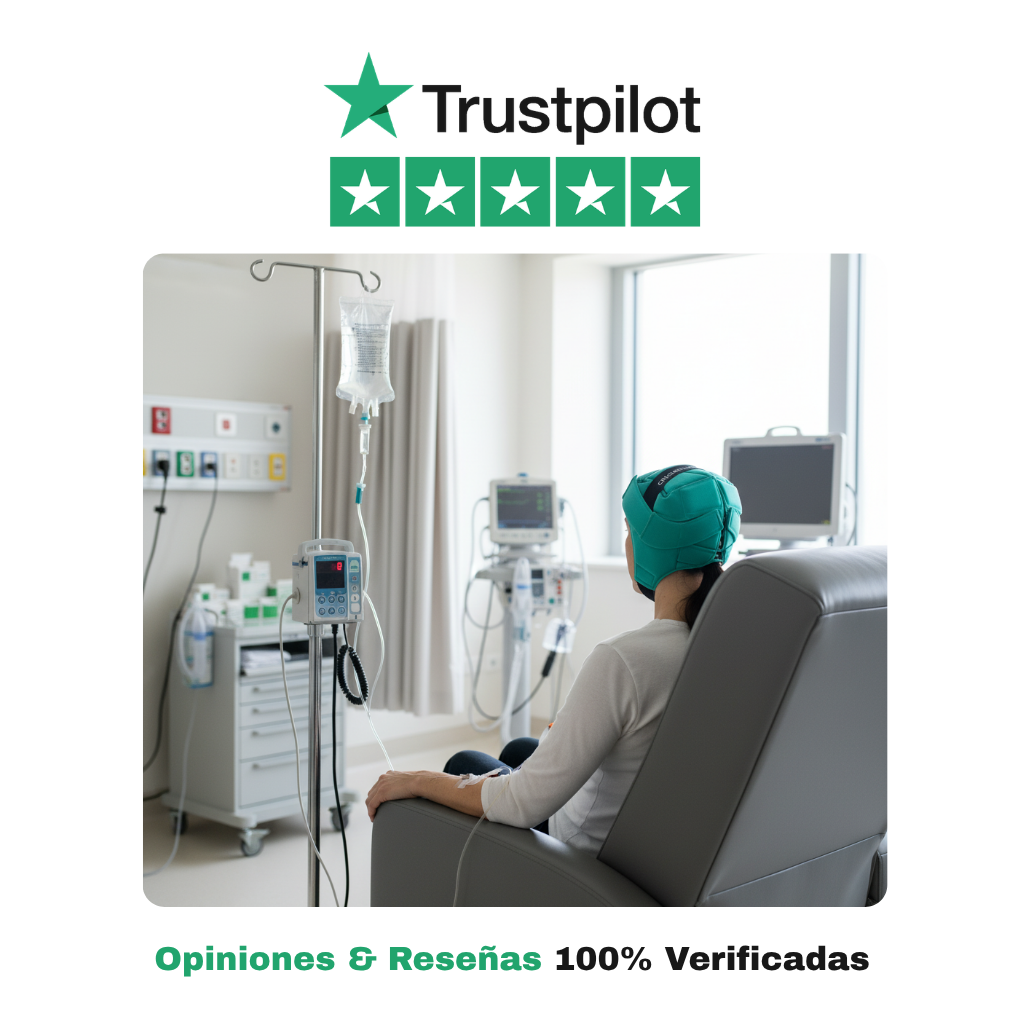
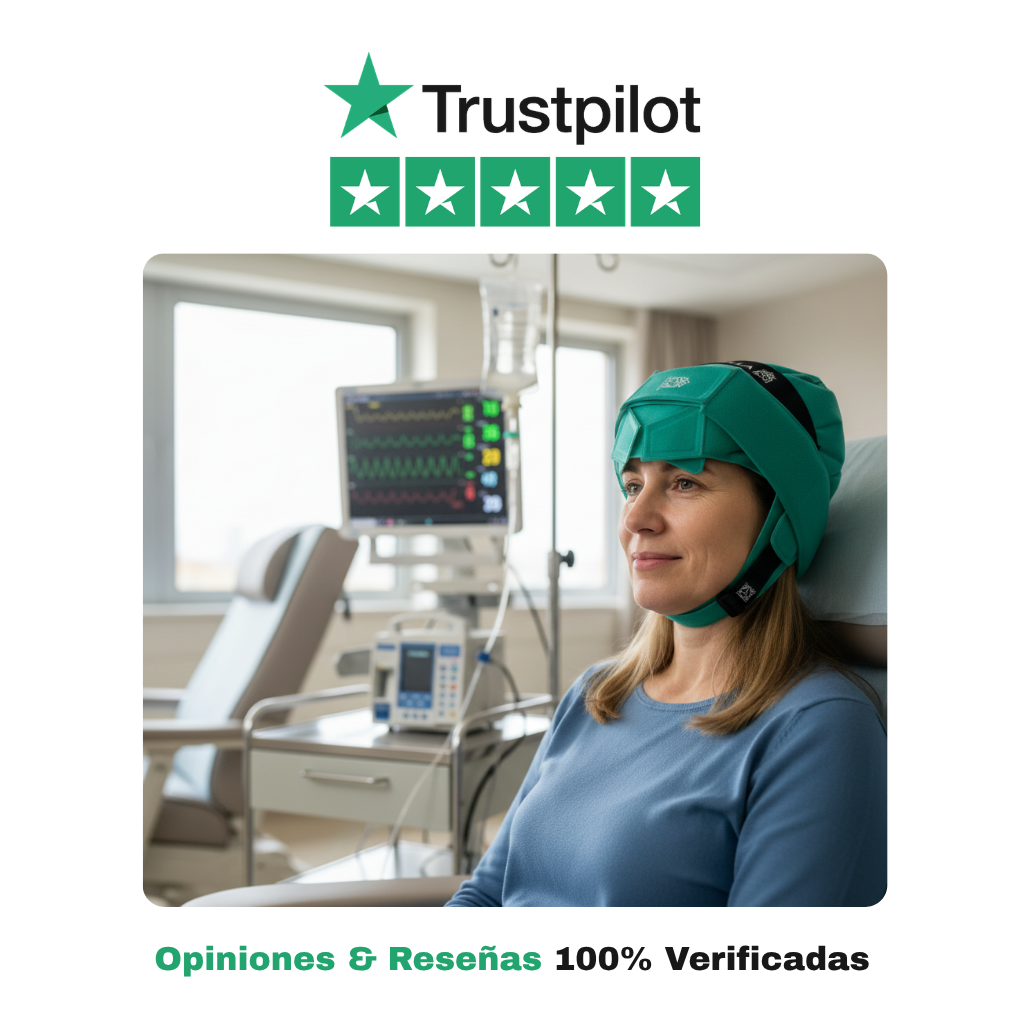
Hypothermic chemotherapy cap opinions are one of the most common consultations among patients who are about to start cancer treatment. Hair loss is often one of the most feared side effects, not only because of the physical change it entails, but also because of the emotional impact it can have during the whole process.
The system of capillary cooling, scalp cooling, also known as scalp cooling, is used to try to reduce alopecia caused by certain chemotherapy drugs. The principle is simple: cooling the scalp reduces blood flow to the hair follicles, which can reduce the amount of drug reaching them.
Many patients seek real testimonials before deciding to use this system. Reading experiences from others who have been through the same thing helps to better understand what to expect from the treatment.
In this case, we share the experience of Ana, a breast cancer patient who used hair cooling caps during her paclitaxel treatment and managed to keep her hair throughout the process.
The experiences with hypothermic caps in chemotherapy can vary depending on the type of treatment and the response of each patient. In this review published on Trustpilot, Ana explains her experience using the capillary cooling system during her treatment.
“My experience has been really good. I have kept my hair during the whole chemotherapy process. It has fallen out like it did in autumn, with a little less density, but never any clumps or bald patches.
I had HER2-positive breast cancer and my treatment consisted of 12 weekly chemotherapy sessions with paclitaxel combined with trastuzumab.
I put on the first cap half an hour before the chemotherapy, during the session and one hour after. I changed the caps every half hour and the others remained in the thermal bag to keep the cold in.
For me, having hair during treatment helped me not to feel sick and for my children to see me as I always have”.”

Such testimonials show that the aim of hair cooling is not always to preserve 100 % of hair, but to prevent complete hair loss. In many cases, keeping a significant part of the hair makes it possible to continue daily life more normally.
In addition, Ana describes several practical aspects of the process, such as preparing the caps, changing them every 30 minutes and the importance of keeping them frozen beforehand so that they work properly.

The opinions hypothermic chemotherapy cap show that results may vary depending on the treatment received and the characteristics of the individual patient. Factors such as the type of drug, dose and duration of chemotherapy directly influence the effectiveness of capillary cooling.
In many cases, especially with taxane-based treatments such as paclitaxel, it is possible to preserve a significant part of the hair. Although there may be a loss of density, many patients manage to avoid complete alopecia.
Beyond the aesthetic result, numerous testimonials highlight something very important: the emotional impact of keeping your hair during treatment. Maintaining an image closer to the usual one can help to face the disease with greater peace of mind and normality.
Reading about real-life experiences like Ana's gives other patients a better understanding of how the system works and what to expect during their treatment.
If you would like to know more testimonials and experiences of patients who have used hair cooling caps, you can continue to explore the articles and reviews published on Criobella.